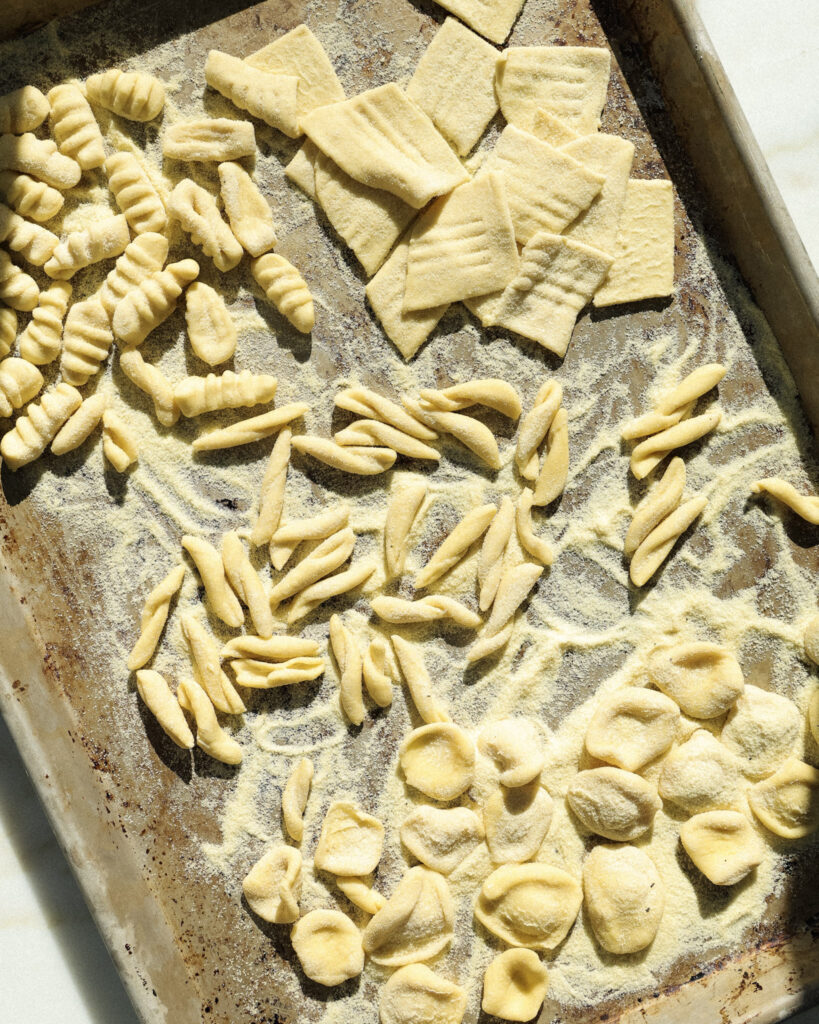
Making homemade pasta without any special equipment is surprisingly easy, and even more fun! No pasta is machine needed here. All you need is semolina flour, water, and some basic kitchen tools like a bench scraper (or even the flat edge of a butter knife), a rolling pin, and a fork.
The best past? Shaping pasta by hand is so satisfying and lets you get a little creative. You can roll it, twist it, or cut it however you like right on your countertop. I’m sharing four of favorite pasta shapes that you can make by hand, but honestly, the options are endless.
These noodles all hold sauces beautifully, so whether you’re keeping it simple with butter and parmesan, making a creamy healthy vodka sauce, or tossing in your favorite veggies, every bite will be packed with flavor. This recipe makes a single serving but it’s super easy to double or triple it, or however much you need!
Read on for the recipe, tips for shaping pasta by hand as well as any substitutions that may work!
Table of contents
Ingredients you’ll need
- 100g semolina flour
- 50g water
Why is this recipe in grams?
Grams is always my preference for baking, and I hope it will be yours, too. The only way to ensure complete accuracy is through measuring by weight, not volume. One cup of flour can weigh all the way from 120 grams to 160 grams, depending on how it was packed. This ends up causing some volatility and miss-matched results.
I want to ensure you get the best results with this recipe (and I want to keep this recipe fool-proof!) so I highly recommend getting a small affordable kitchen scale if you want to move forward with this particular recipe.
Do I have to use semolina flour?
Semolina flour is my secret weapon for homemade pasta. It gives the pasta the perfect al dente bite, it’s golden color, and a firm, never sticky, texture. Plus, it’s easiest to shape by hand and holds sauce like a dream! It’s also getting easier to find. I like to use Bob’s Red Mill brand, which I can usually find at any grocery store near me.
However, if you need a substitute, you do have some options:
- To best mimic semolina’s texture: I would recommending using another high-protein flour like bread flour, whole-wheat flour or durum flour.
- For a softer texture or something more readily available: all-purpose flour or “00” flour will work!
How to make fun pasta shapes by hand
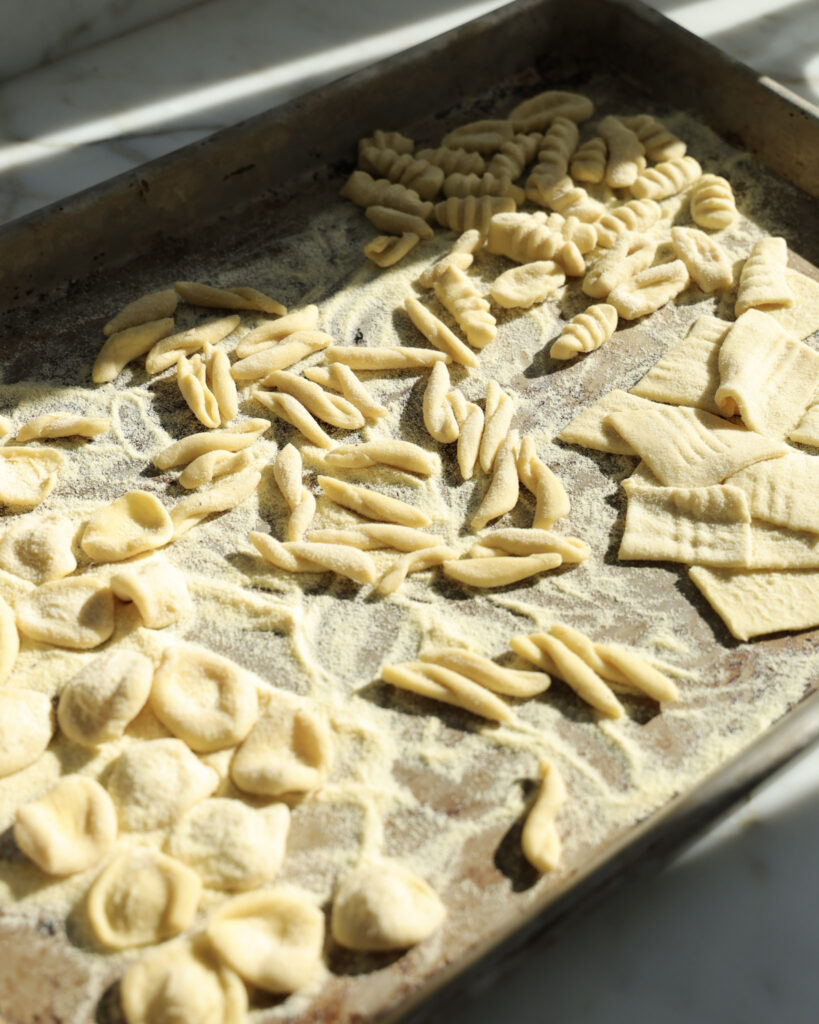
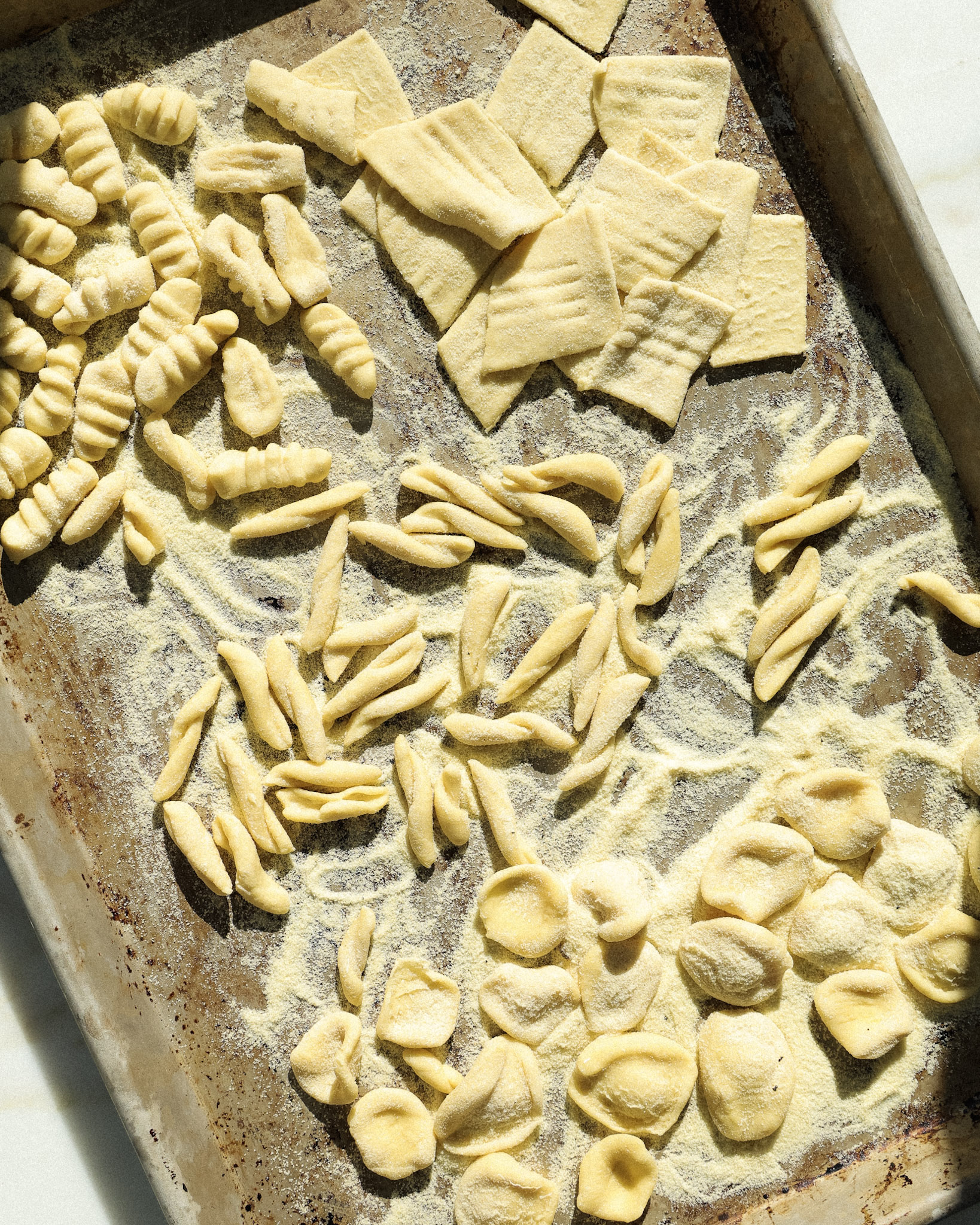
Making pasta shapes without a pasta maker is easier than it looks and you have way more options than you think! Here are my four favorite pasta shapes to make by hand:
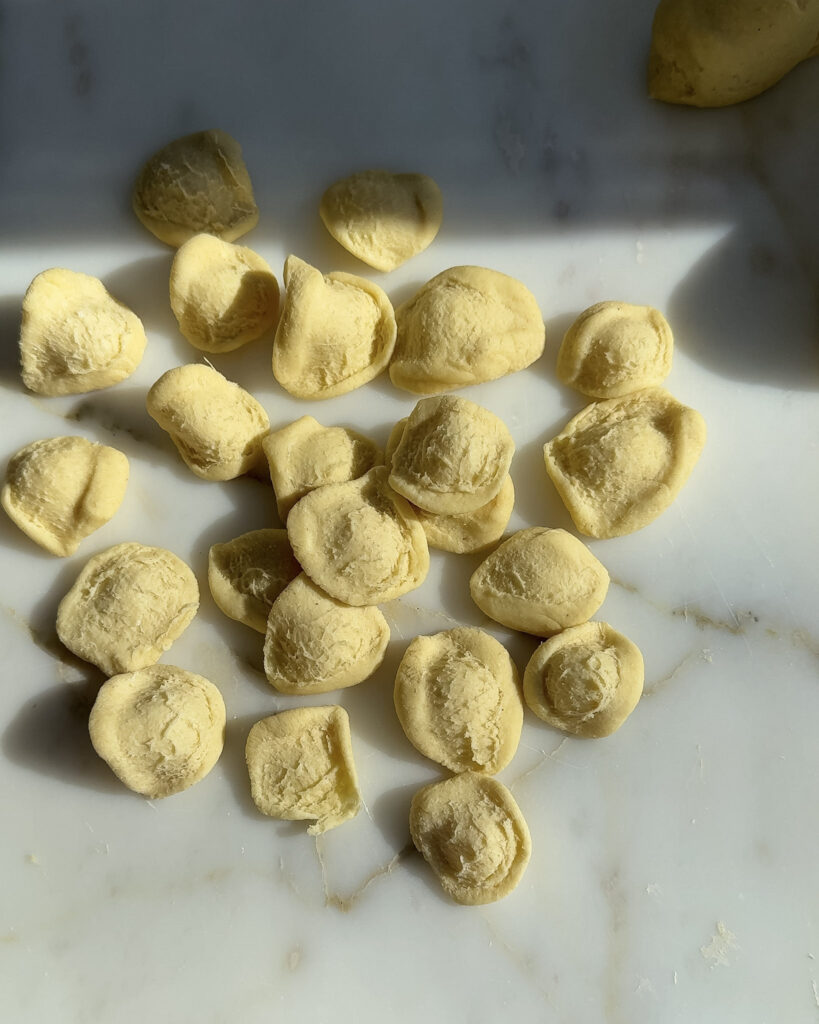
To make orecchiette:
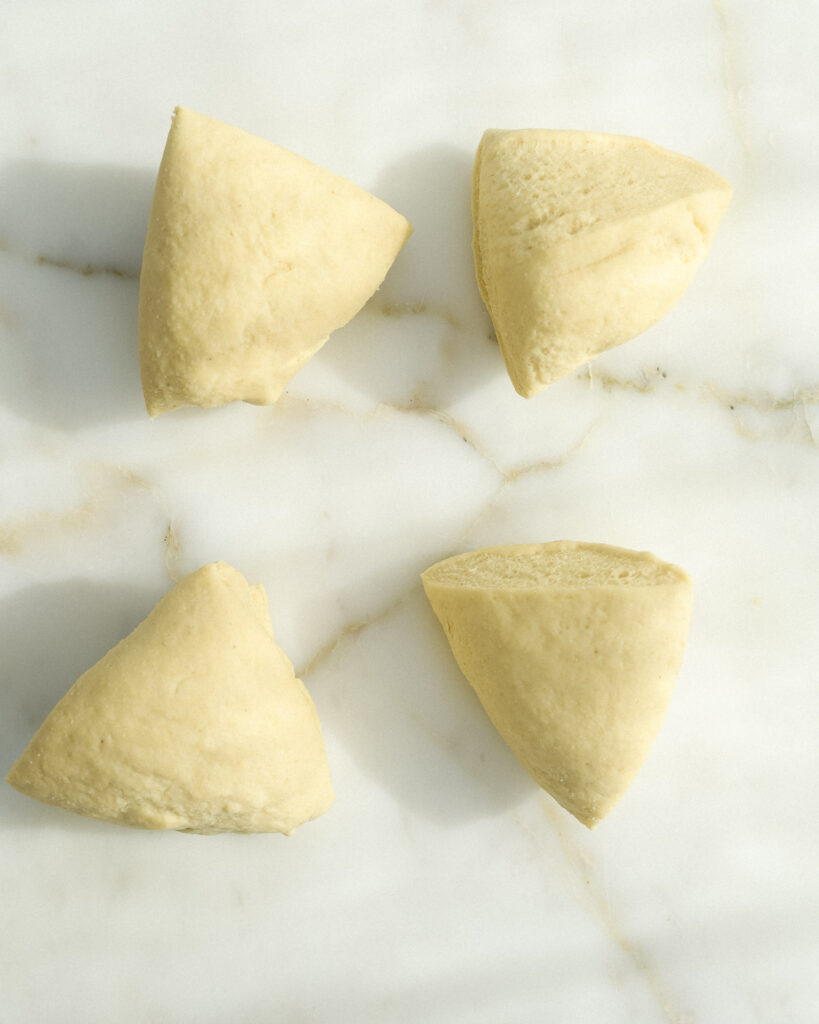
- Portion the dough into two pieces and roll the out into long logs, about 1-2 cm thick.
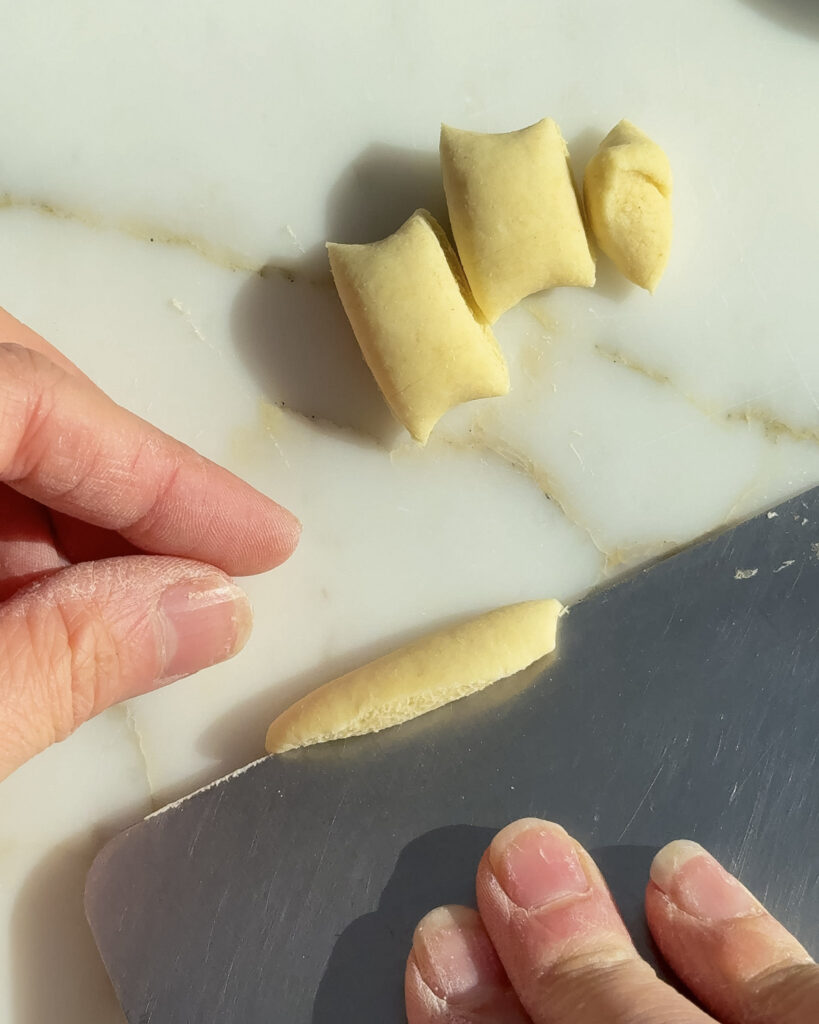
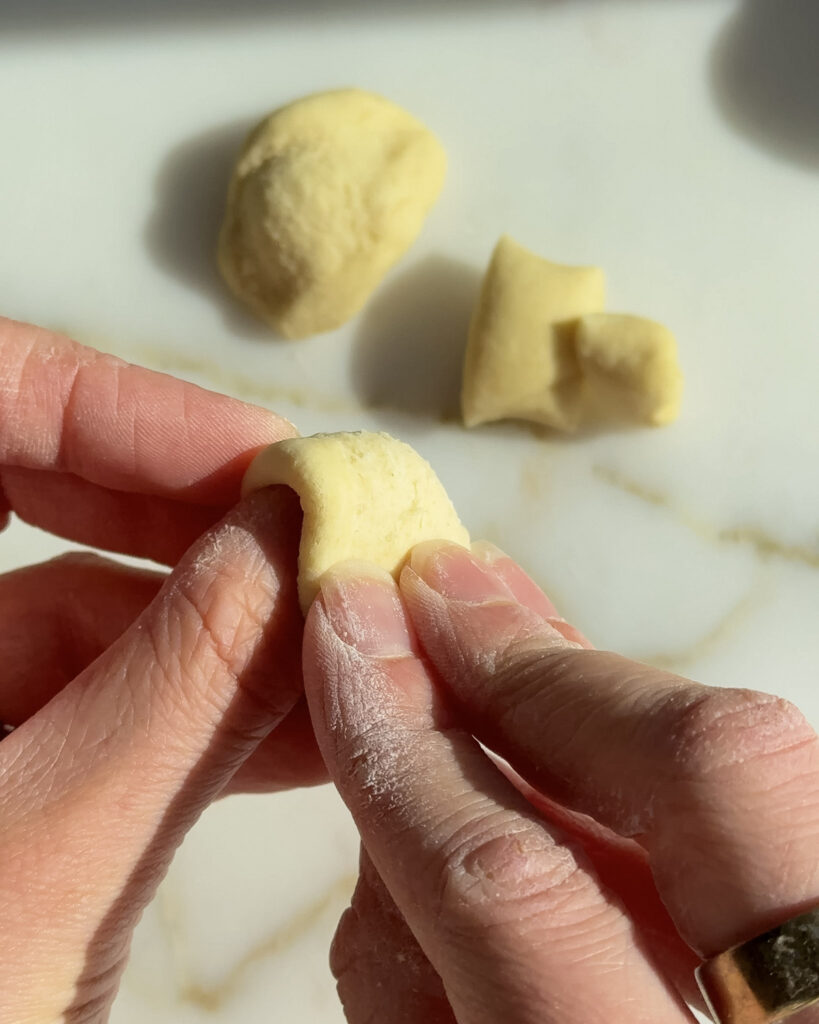
- Cut down the log as if you are making gnocchi. Take each piece of dough and use the bench scraper to press down on the furthest side from you, pull the bench scraper towards you, flattening the piece of dough and causing it to turn into a little boat.
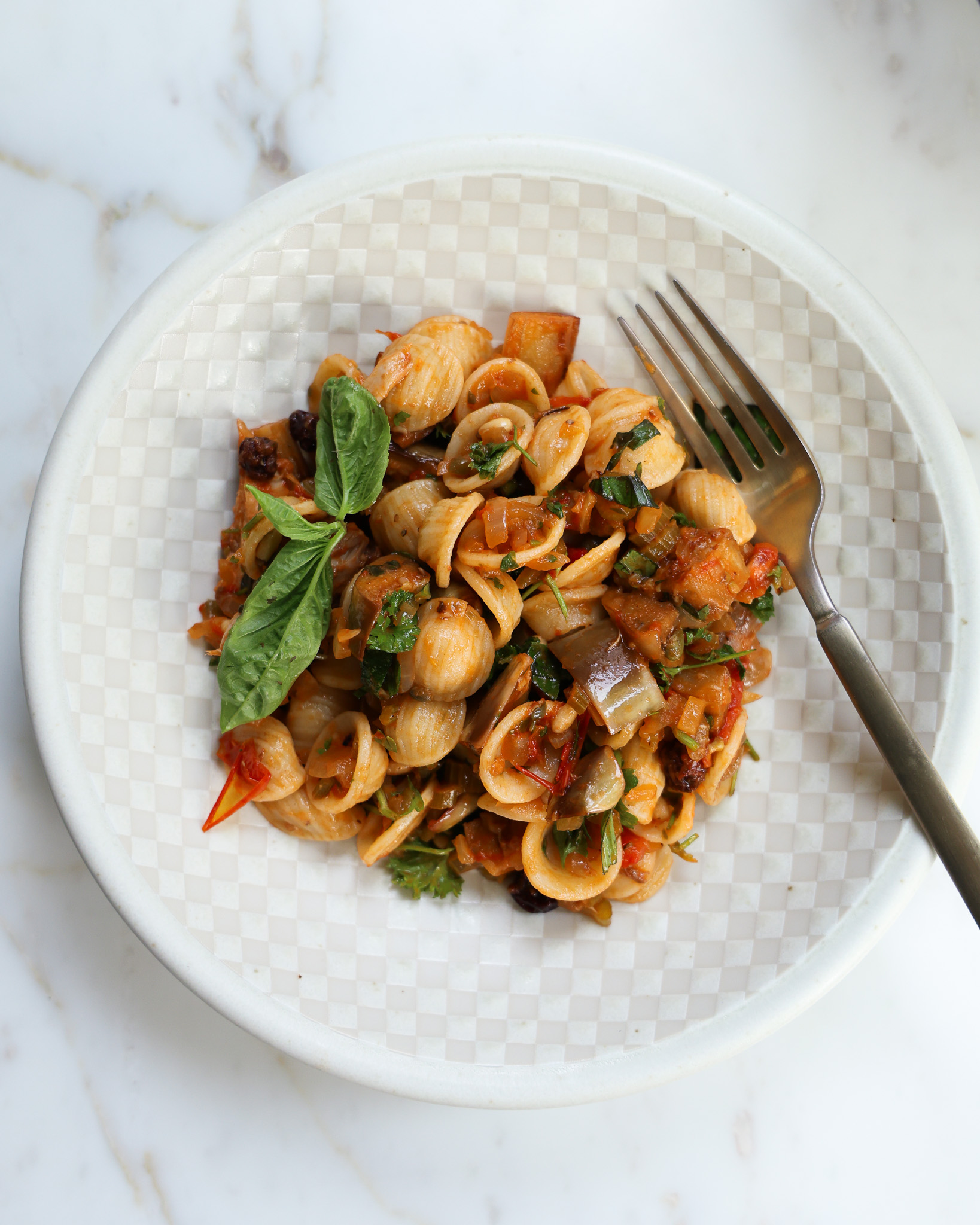
- Turn this “boat” inside out with your thumb, and you’ll have orecchiette!
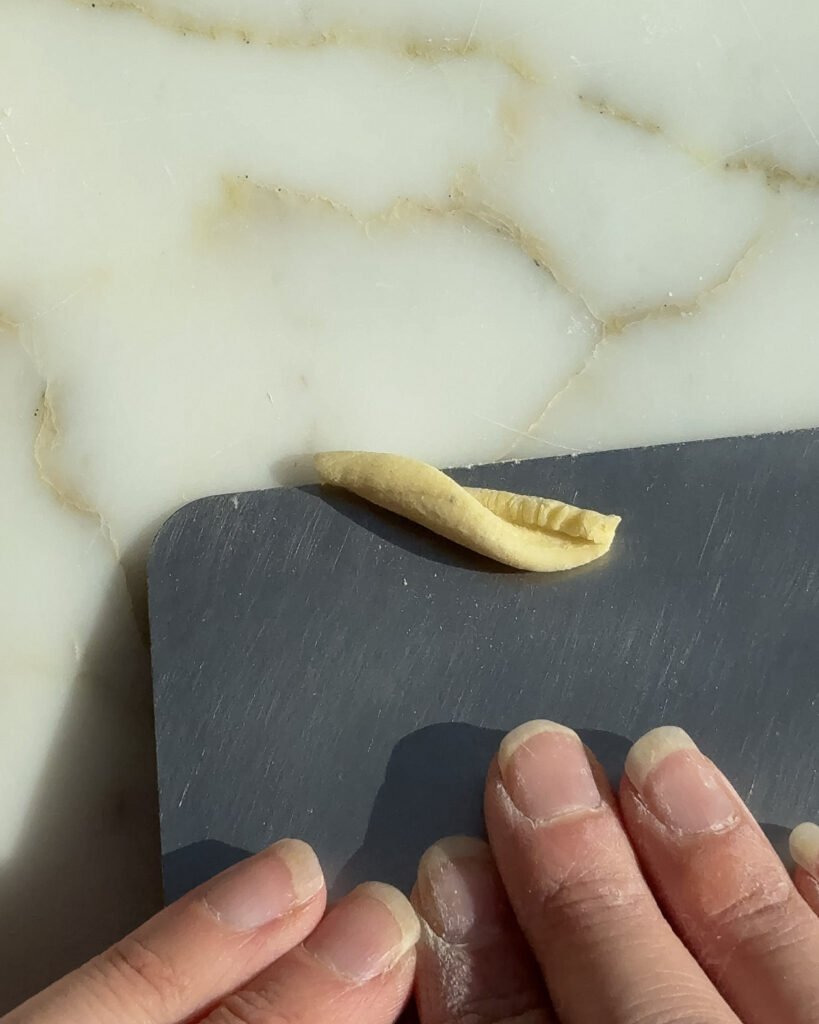
To make a simpler gemelli:
- Portion the dough into two pieces and roll the out into long logs, about 1-2 cm thick.
- Cut down the log, making very small pieces around 1/4 cm thick. Position the piece of pasta at a 45° angle compared to the edge of your bench scraper, then gently roll the bench scraper from the top of the piece to the bottom, easing into a curl.

To make a sauce-gripping pasta:
- Portion the dough into two pieces and roll the out into long logs, about 1-2 cm thick. Cut down the log as if you are making gnocchi.
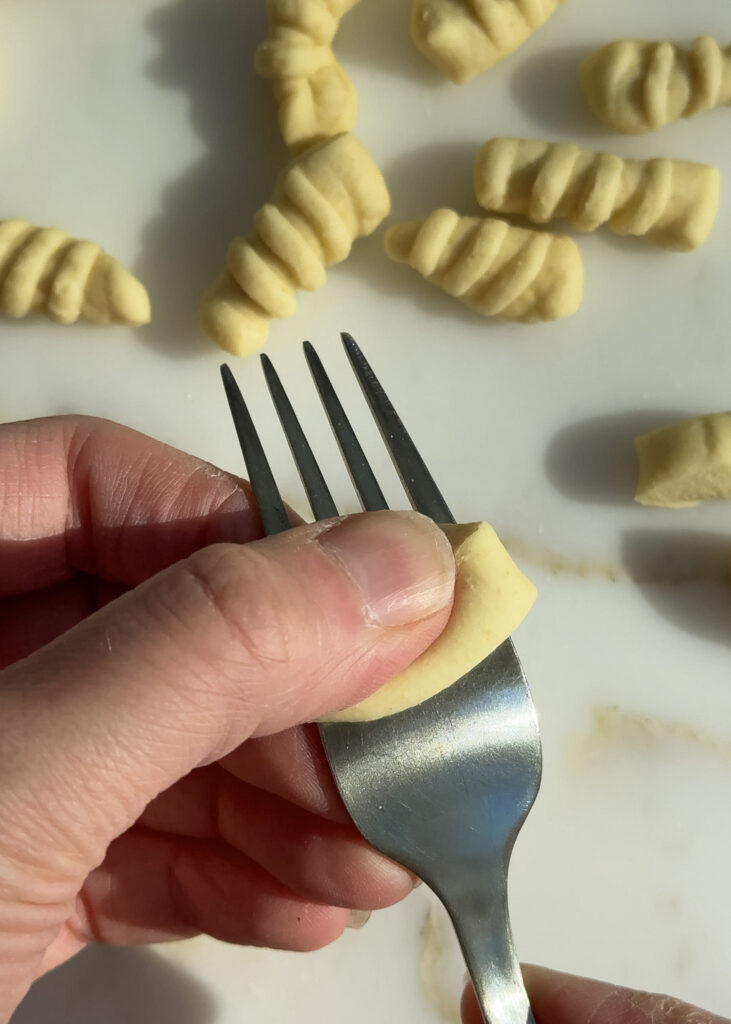
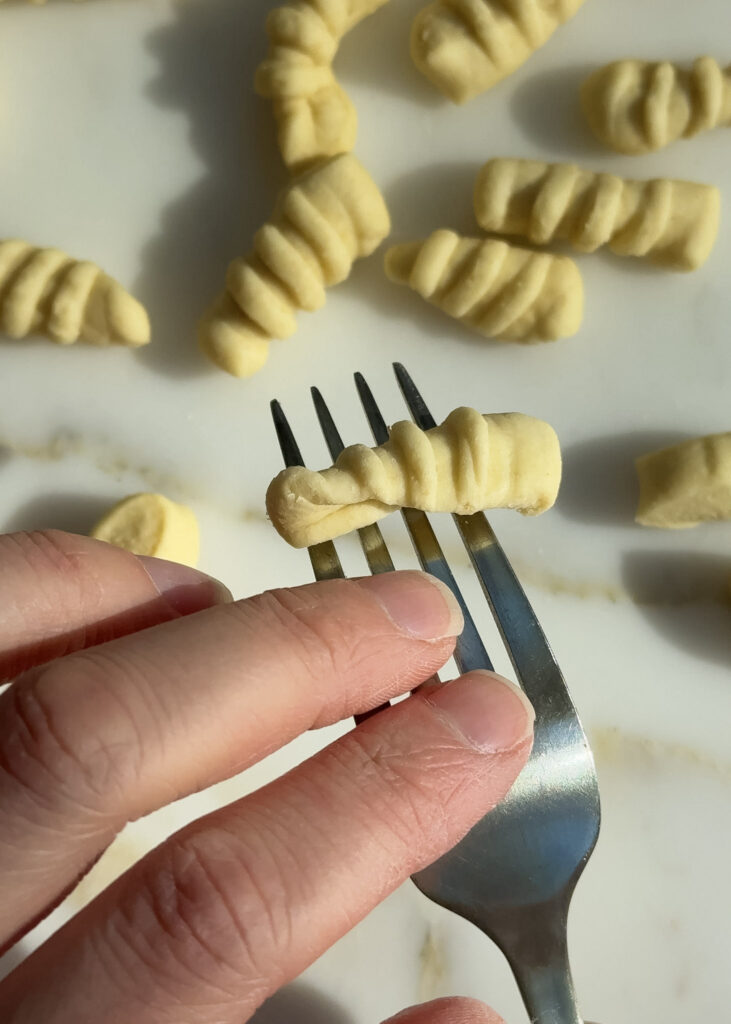
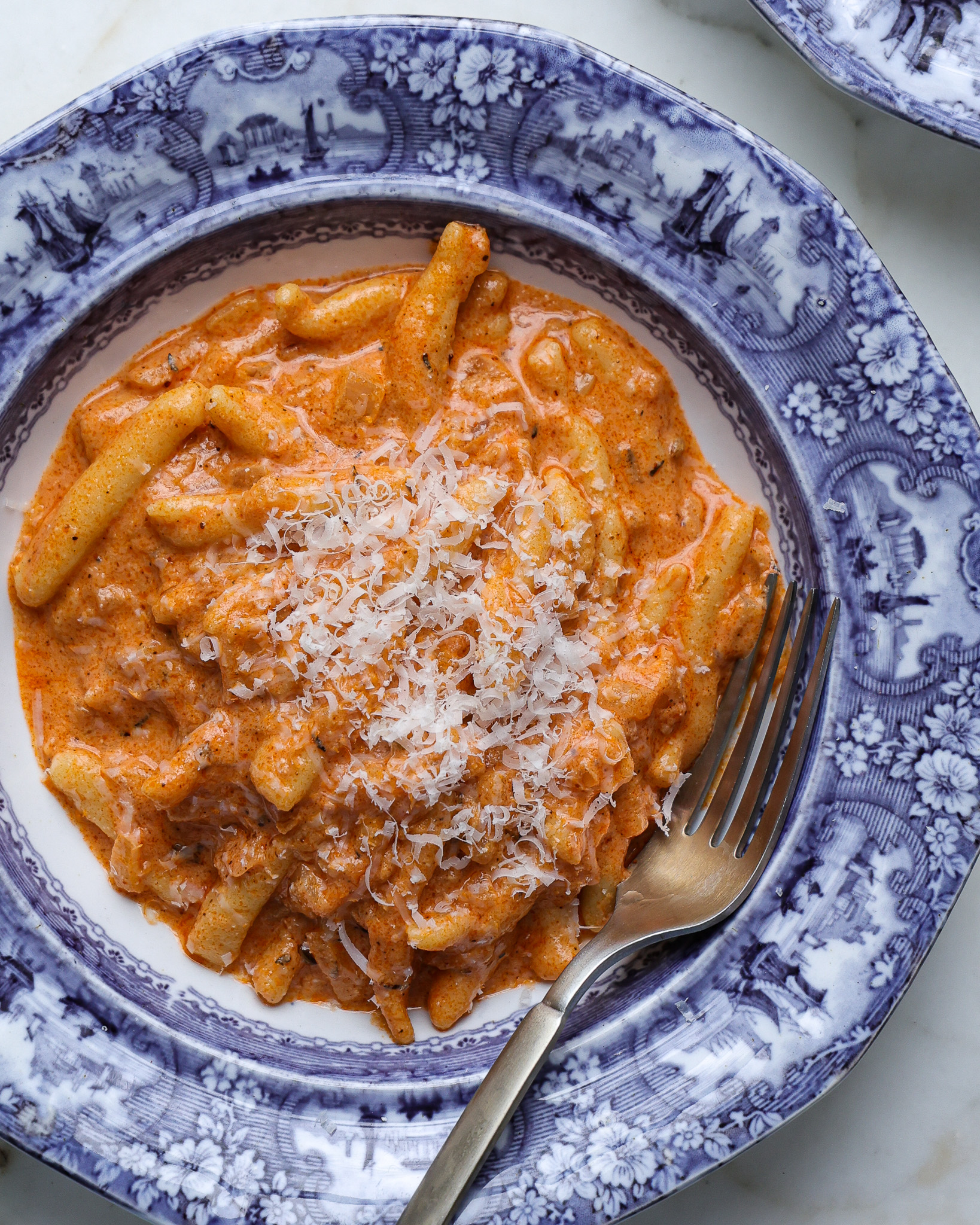
- Take each piece of dough and press it down into the back of a fork, use your thumb to gently roll the pasta off of the fork, creating an indented, curled pasta shape. This one is exceptional for sauce-clinging.
To make half-way ravioli:
- Lightly dust the dough with semolina flour, then use a rolling pin to roll it out as thin as it can possibly get. You will want to be able to see your finger tips through it. Add flour as needed.
- Use a bench scraper to cut the dough into 2-inch square pieces. Use the back of a fork to imprint lines in the dough.


Apart from these, hand-cut pastas like fettuccine and pappardelle, gnocchi-shaped, bow-tie pasta, pici, cavatelli and more can all be done by hand!
Drying and storing homemade pasta
Once you’ve shaped your pasta, you can either cook it right away or save it for later! Here’s the best way to store it, based on each method:
Fridge: If you’re not cooking your pasta right away, you can keep it fresh in the fridge for a couple of days. Just dust it with a little semolina flour so it doesn’t stick together and pop it in an airtight container for up to 3 days.
Freezer: For longer storage, freezing works beautifully! Arrange the pasta in a single layer on a baking sheet, freeze until firm, then transfer to a freezer-friendly container and freeze for up to 3 months. When you’re ready to eat, you can cook it straight from the freezer, no thawing needed!
Drying and storing at room temperature: After you’ve made your pasta, spread it out on a floured baking sheet and give it a light dusting of semolina flour. Let it dry for about 24 hours, or until it is no longer pliable. Once fully dried, transfer into a sealed container and store it in a cool, dry place for up to a few weeks.
Watch the recipe here:
The video may not fully represent the recipe. For best results, follow the instructions as written.
Looking for similar recipes?
Homemade Sweet Potato Gnocchi

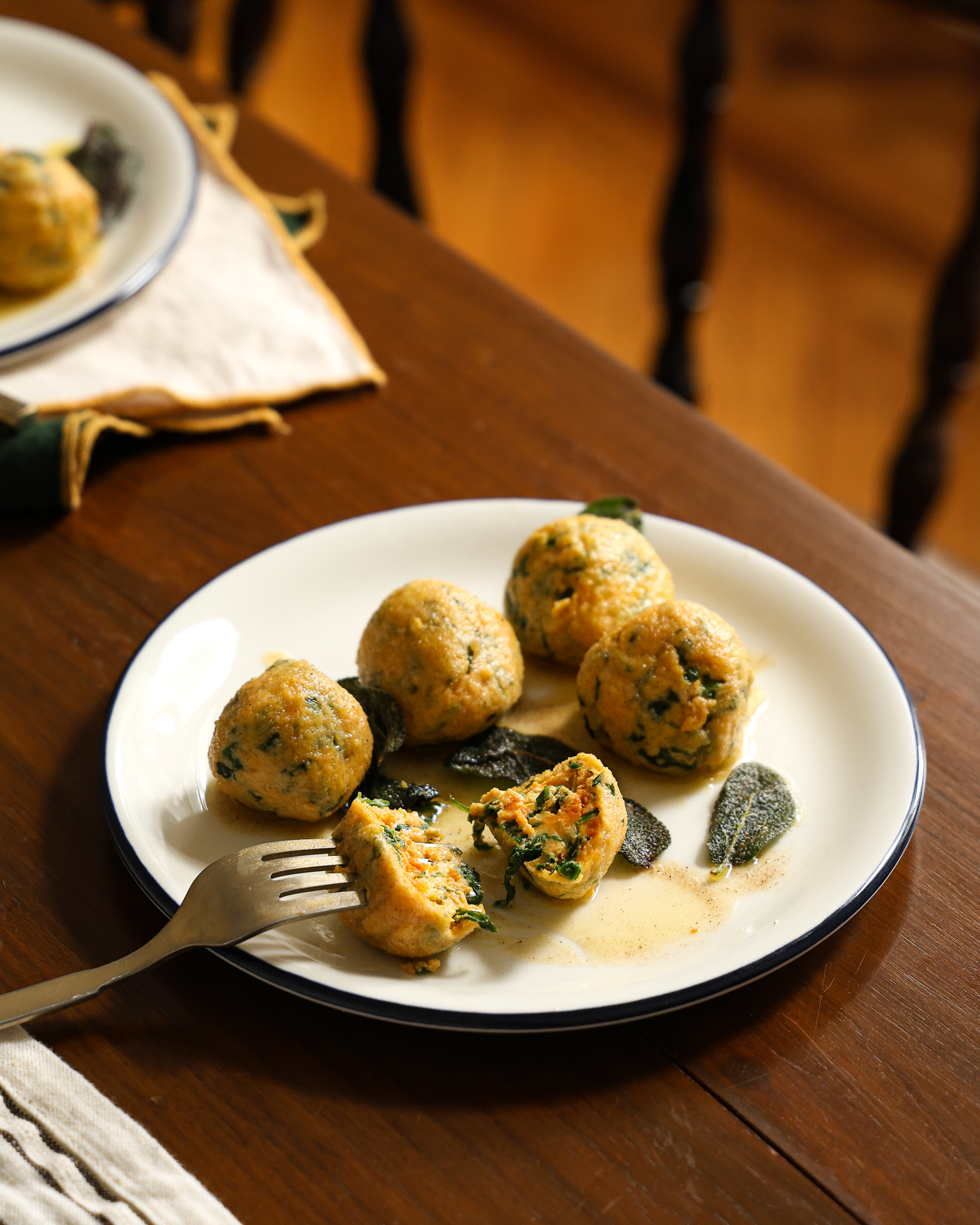
Spinach & Ricotta Gnudi
Creamy Tofu Pasta Sauce
And that’s everything for this homemade pasta without any special equipment!
If you make it, please tag me on Pinterest or Instagram so I can see! It’s my favorite thing to scroll through stories and see what you all are making.
You can also shop this video if you’re looking for the exact pieces I use – I’ve linked everything on my ShopMy! *some links may contain affiliate commissions
And of course feel free to leave any questions, comments or reviews! This is the best place to reach me, and I’d love to hear from you <3
Equipment
Ingredients
- 100g semolina flour
- 50g water
Instructions
For the dough:
- Add 100 grams of semolina flour to a medium bowl. Drizzle in 50 grams of water and mix with your hands. It will look crumbly, but then it will quickly turn into a tacky dough. Give a few big presses against the bowl to form it into a mound. If you feel it is too dry, add 1/2 teaspoon of water at a time. You want the consistency of clay.
- Move the dough to an unfloured work surface. Knead it with the palm of your hand for 2-4 minutes, until it is a smooth ball. The more you knead it, the smoother it will get. If there are cracks in the dough, continue to add water 1/2 teaspoon at a time and knead it in. You will know it’s ready when it is fully smooth, a bit stiff, and malleable like clay.
- When you have a smooth ball, let it rest for 2-5 minutes before making your pasta.
To make orecchiette:
- Portion the dough into two pieces and roll the out into long logs, about 1-2 cm thick. Cut down the log as if you are making gnocchi. Take each piece of dough and use the bench scraper to press down on the furthest side from you, pull the bench scraper towards you, flattening the piece of dough and causing it to turn into a little boat. Turn this “boat” inside out with your thumb, and you’ll have orecchiette!
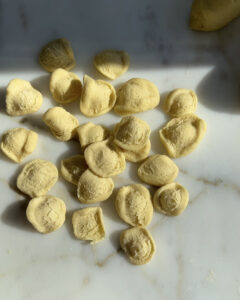
- Dust with semolina flour and move the pieces to a baking sheet.
To make a simpler gemelli:
- Portion the dough into two pieces and roll the out into long logs, about 1-2 cm thick. Cut down the log, making very small pieces around 1/4 cm thick. Position the piece of pasta at a 45° angle compared to the edge of your bench scraper, then gently roll the bench scraper from the top of the piece to the bottom, easing into a curl.
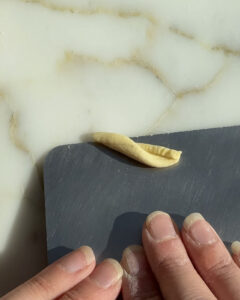
- Dust with semolina flour and move the pieces to a baking sheet.
To make a sauce-gripping pasta:
- Portion the dough into two pieces and roll the out into long logs, about 1 cm thick. Cut down the log as if you are making gnocchi. Take each piece of dough and press it down into the back of a fork, use your thumb to gently roll the pasta off of the fork, creating an indented, curled pasta shape. This one is exceptional for sauce-clinging.
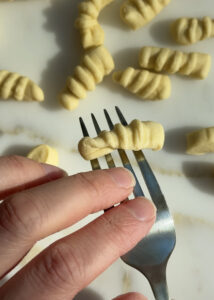
- Dust with semolina flour and move the pieces to a baking sheet.
To make halfway-ravioli:
- Lightly dust the dough with semolina flour, then use a rolling pin to roll it out as thin as it can possibly get. You will want to be able to see your finger tips through it. Add flour as needed. Use a bench scraper to cut the dough into 2-inch square pieces. Use the back of a fork to imprint lines in the dough.
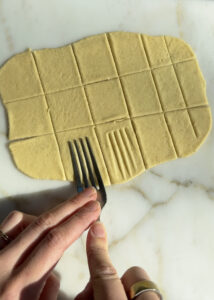
- Dust with semolina flour and move the pieces to a baking sheet.
To cook the pasta:
- Each of these pasta varieties will boil for 4-6 minutes. Once they are floating, they are usually done. For best results, boil in salted water.
Comments
No notes, the orecchiette were so easy and the texture was perfect. Only question is if you think its possible to apply the same sort of coloring/flavoring techniques used in other types of pasta recipes. Could you replace the water here with spinach puree and get green orecchiette?
Hello! Sorry for my delay here, as long as you keep 50% hydration (ie. 100 grams of flour needs 50 grams of whatever liquid you prefer), then you should have luck with any variation 🙂
Leave a Comment
Made this recipe? Tell me all your thoughts or if you’ve got any questions!